

36.084651
-115.092352
As we move into the cooler weather it is time to think about staying warm without breaking the bank.
Do you “rug up” in winter, rather than rely on artificial heating?

Turn your heating thermostat down a couple of degrees (to 20°C/68°F) and wear a jumper or sweater in winter. Every degree over 22°C/72°F adds about 10% to your heating bill.
Use a hot water bottle and blanket while watching TV rather than a portable heater!
 Say NO to fan heaters ( they may be cheap to buy but are very costly to run. It costs about 2¢ to boil a quart of water (either on the stove or in a microwave), and a hot water bottle will stay warmer for longer without using any electricity.
Replace conventional thermostats with programmable alternatives!
 Most homes ten years old or less already come with programmable thermostats. If you have an older home with manual thermostats it is very easy to for even the novas fixer-upper to install a new programmable model. And some new programmable thermostats can now be controlled through your home computer or smart phone. Programmable thermostats will enable the temperature of the home to be changed, automatically, to different temperatures during times when the home is normally occupied or unoccupied. In addition, many have a re-circulate feature that can allow for temperature to be kept constant when significant differences in temperature exist on different levels of the house.

Image via Wikipedia
It seems that everyone is mounting a battle against the oil companies in an all out effort to shut them down. I for one don’t think that we need to shut down oil companies but rather focus on how the oil companies can help move us into the future just as they did One Hundred Forty One years ago.
Shell, Exxon/Mobile, Chevron/Texaco, BP/Arco, Conoco/Phillips, and Standard Oil are all investing millions of dollars in clean energy research. Why would they do this? Because they too realize that the future depends on alternative energy for transportation and electricity.
Oil Companies and “Wild Cats” as they were known in the early days have done a lot towards the promotion of prosperity to the citizens of the U.S. It was the early and cheap abundance of oil that spurred on the industrial age and was responsible for the development of nearly everything we use in today’s daily life.
That said, I do believe that we have “put all of our eggs in one basket” by relying so heavily on oil for our every need. I don’t think that we need to stop using oil all together but we do need to stop the estimated $61 Billion in government subsidies for oil and related fossil fuel giants. To read more about oil subsidies go to http://greeneconomypost.com/oil-companies-pay-fair-share-19203.htm#ixzz1XwMZl9OI.
Just as the world is made up of an array of beautiful colors, the debate on oil is not black and white. It does not make since to totally ban the use of oil all together but rather to use the resource more sensibly.
Standard Oil of Ohio, founded in 1870 by John D. Rockefeller, Henry Flagler and Henry H. Rogers, was the first official “Oil Company” and produced nearly 90% of all the refined oil in the U.S. by 1911 when the company was broken up into 34 different companies under anti-trust laws. As big as Standard Oil was, the dividends received Mr. Rockefeller and fellow shareholders also created hundreds of other smaller, by comparison, companies that made this country grow. Not to mention the philanthropic contributions that are still being doled out to this day.
We need this message to be brought home…we are not trying to do away with oil; but make its use more efficient, and in the meantime use the knowhow and resources of Big Oil Companies to assist with bringing online new innovations.
Oil will always have a place in this world; so many products depend upon its chemical makeup. But, as we develop alternative energy sources, better energy storage, smarter energy delivery; we will also develop more efficient uses for that technology including cleaner transportation and manufacturing processes that will do away with the burning of petroleum based fuels.
 Time for mom and dad to do a little reading.
Even though the temperature shows no indication of change, fall will soon be here. And for many of you that means back-to-school. This morning I was listening to NBC’s Today show where they were giving hints on how and when to shop to get the best bargains in today’s economic times. Might I suggest that while you are looking at price tags on school supplies that you also read the labels on the inside of clothing and on packaging!
When back-to-school shopping, avoid buying school supplies containing polyvinyl chloride (PVC or vinyl) or other toxic plastics.
According to the Center for Health, Environment & Justice (CHEJ), PVC plastic is one of the most hazardous consumer products ever created. PVC is dangerous to human health and the environment throughout the chemical’s entire life cycle; at the factory, in our homes, and in the trash. Our bodies are contaminated with poisonous chemicals released during the PVC lifecycle, such as mercury, dioxins, and phthalates, which may pose irreversible life-long health threats. When produced or burned, PVC plastic releases dioxins, a group of the most potent synthetic chemicals ever tested, which can cause cancer and harm the immune and reproductive systems.
Children are at risk from even small exposures to these toxic chemicals. That’s why it’s important to purchase PVC-free school supplies.
The CHEJ recently released this year’s Back-to-School Guide to PVC-Free School Supplies to empower all of us to make smarter, healthier shopping choices for a toxic-free future. The guide lists the most common back-to-school supplies made out of PVC plastic and suggests safer PVC-free alternatives.
You can also download the wallet-sized version of the guide here: http://www.chej.org/publications/PVCGuide/PVCwallet.pdf
WHAT TO AVOID:
For additional information:
WHAT YOU CAN DO:
Rather than recycling or tossing PVC items, like old vinyl curtains and floor tiles, in the trash, Mike Schade, CHEJ’s PVC campaign coordinator, recommends disposing of them in hazardous waste landfill sites. Call your sanitation department or state environmental agency to see where you might dispose of hazardous material.
The CHEJ also suggests returning PVC products and packaging to retailers and manufacturers. “We recommend consumers contact manufacturers and let them know that PVC is an unacceptably toxic material and that it should not be used in production,” says Anne Rabe with the CHEJ. “As consumers, they can also send that message by not purchasing products packaged or made from PVC.
This is becoming an easier task already. Rabe points out that there are a number of PVC alternatives already on the market. For example, Ikea now sells non-PVC shower curtains exclusively.
Some manufacturers have already heard the calls for a halt to PVC use in production. The CHEJ has successfully worked with Victoria’s Secret and Microsoft to eliminate PVC from their packaging and is currently in talks with Target, Sears and Wal-Mart. Wal-Mart has already committed to eliminating PVC in its private-label-product packaging in two years.
Source: CHEJ’s report, PVC: The Poison Plastic

Image via Wikipedia
Well the 4th of July has come and gone but there are still plenty of days left for summer BBQ’s. But is it possible to grill and still be green?
According to Greenzer.com, on the Fourth of July alone, an estimated 60 million barbecues light up nationwide, consuming enough energy to power 20,000 households for an entire year. And this number doesn’t even take into account the waste of paper, plastic, and food that goes into barbecuing.
Source: SunnKing.com

Image via Wikipedia
The Southern Nevada Water Authority and water purveyors throughout the southern and southwestern part of the U.S., have long advocated against having massive water intensive lawns. The option to not having turf is a landscaping pallet made up of indigenous plants that are able to survive on the amount of rainfall that is normal to your area. These plants can range from groundcover to trees that are classified as drought tolerant. In addition to providing color and texture to your property, a well designed landscape will attract birds, provide needed shade and cut down on the Heat Island Effect.
Even with this type of planting you still must control weeds that invade your property. So what are your options, bending over (or kneeling), to pull weeds by hand or spraying them with herbicides.
A recent study from the University of Southern California found that young infants and toddlers exposed to weedkillers within their first year of life are four-and-a-half times more likely to develop asthma by the time they are five and almost two-and-a-half times more likely when exposed to insecticides. The studies go on and on that link childhood exposure to chemicals to cancer, asthma and learning and developmental disorders.
Lawn Fact: During a typical year in neighborhoods across the country, over 102 million pounds of toxic pesticides are applied in pursuit of a perfect lawn and garden. This figure, up from 90 million pounds in the year 2000, continues to grow despite the growing body scientific evidence of the public health and environmental consequences. Source: Beyond Pesticides
In addition to the concerns of human direct contact with herbicides and insecticides there is also the issue of downstream polluting. When chemicals are sprayed over large surfaces such as turf, large quantities are needed to accomplish the goal of either fertilizing or killing weeds. These large quantities of chemicals build up and are not completely absorbed into the plants or soil, so when sprinklers water the lawns or during normal rain events, these chemicals are washed out of the lawns into the storm systems and carried to lakes, rivers and streams. Many times these bodies of water, as is the case with Lake Mead outside of Las Vegas, are the main source of drinking water.

Children and lawn chemicals don’t mix!
So, is the option have to have an ugly, weedy lawn? No! The National Coalition for Pesticide-Free Lawns has some easy tips you can use to create a healthy lawn.
Is an occasional dandelion, knotweed or clover cause for alarm? No! Dandelions’ deep roots return nutrients to the surface, crabgrass provides erosion control and the virtues of clover were addressed above. And by not using chemicals on your lawn you are helping your children, pets, neighbors and our planet live a healthier life.
Need some non-toxic gardening tips?
Know the health and environmental impacts of the products you’re using to improve your lawn and garden. Check out Beyond Pesticides (formerly National Coalition Against the Misuse of Pesticides) works with allies in protecting public health and the environment to lead the transition to a world free of toxic pesticides. The founders, who established Beyond Pesticides as a nonprofit membership organization in 1981, felt that without the existence of such an organized, national network, local, state and national pesticide policy would become, under chemical industry pressure, increasingly unresponsive to public health and environmental concerns.

Image via Wikipedia
I usually do not weigh in on political issues but the subject of unemployment in Las Vegas and attracting a more diverse economy has been on my mind for quite some time. When I started looking into this issue it became clear that this is about “sustainability” as a community. And although my suggestions might go against the grain, especially those of us in the design, development and real estate industries, I decided throw this out as a thought generator. A quick note of apology those of you who do not live inNevada, this posting may not hold much interest. However, I can assure you that future posts will be more applicable to readers wherever you reside on this big blue ball.
How do we attract more industries to Las Vegas, is the question that has been asked since the 1950’s. And even though early Las Vegas pioneers realized that the economy needed to be more diverse, not much has changed in the past 55 or more years.
The real question is, at what point does Las Vegas become self sustaining? There are two key issues involved in this issue…economic and environmental.
First let’s look at the environmental issue.
Southern Nevada has an annual allocation of 300,000 acre feet of water from the Colorado River that is stored in Lake Mead. One acre-foot of water equals 326,000 Gallons; enough to supply one or two households with water for one year (based on the average home using 446.5 Gallons per day or 162,999 Gallons per year.) That allocation is enough water for 600,000 households or a population of 1,632,000 based on the average of 2.72 persons per home according to the 2010 census. So with a current Clark County population of just around 2 million, how is it that we are able to provide adequate water.
The answer is two fold. First, under the leadership of the Southern Nevada Water Authority, Las Vegans have learned how to conserve water. Since 2003, the community has added more than 150,000 people. In 2005, the valley used 15 billion gallons of water less than it did in 2003, roughly 52,000 acre feet. While such an accomplishment is always subject to backsliding, Las Vegas has saved 1/6 of its annual share of the Colorado River while adding a midsized city to its population. In addition to conservation, Las Vegas returns about 70% of its water allocation (210,000 acre feet) back to Lake Mead in the form of highly treated effluent as “Return Flow Credits” against its annual allocation. This means that with the return flow credits the water allocation can support an additional 420,000 households or an additional population of 1, 142,000 persons for a total population of 2,774,400.
At our current population level we are getting disturbingly close to over taxing our most valuable resource. In my opinion, reaching a 2.5 million population level would be stretching water allocations to the very limits without much room for error.
Of course there are a couple of ways that we can increase the amount of water available to this valley. One way, as we all have heard, is the plan to pipe water from the Northern Great Basin area down to Las Vegas to augment our water needs. This plan has met with objections from land owners to the north and will cost a great deal of money to construct the pipeline. Another plan is to build a desalinization plant on the California Coast, they use the water from that plant for their needs and in exchange we get a equal portion of the water allocated to California from the Colorado River. That too is a very expensive proposition. Pat Mulroy, Director of the Southern Nevada Water Authority also has an idea to build diversion dams for flood control and move the water to aquifers beneath the farmlands of Iowa, Nebraska, Kansas and Colorado. If Colorado farmers don’t have to use Colorado River Basin water for their crops, it makes more water available to downstream users, like Southern Nevada.
Those plans, if developed, would obviously increase the amount of water available to Southern Nevada and become sustainable for a much larger population.
A second environmental issue is that of the air quality in the Las VegasValley. As you are aware, we live in a basin that is surrounded by mountains. These mountains act as a barrier that traps atmospheric pollutants. It used to be (back in the 1970’s and 80’s), that during the winter months, when a high pressure system would settle over the valley, a “temperature inversion” would trap pollution creating very unhealthy breathing conditions. However, as the valley’s population has increased from 250,000 in 1975 to one-million in 1990 and then two-million by 2005, the increase in automobiles and other polluting devices has seen a rise in the number of unhealthy air quality days. Now, it is not unusual to see the familiar ‘brown cloud over the Las Vegas Valley even during the summer when a high-pressure system settles in creating warm days without a breeze. As population increases in the Valley so too will the pollutants in the air to the point that Las Vegas will begin to look like theLos Angeles Basin.
Next let us look at economic conditions.
When I arrived in Las Vegasin 1975, the population was 250,000 persons and there were 35,000 hotel rooms. At that time there was an average of 3 people employed for each hotel room built and, another 2 persons were employed outside of the hotel industry in support type businesses (e.g. grocery, dry cleaning, hair cutting, auto service etc.) for a total of 5 persons employed per hotel room. So that means in 1975, the hotel casino industry supported approximately 175,000 jobs or 75% of the population. It is no wonder that unemployment in this town was below 4% at that time.
By 1990 the population of Clark County had grown to 741,459 and the number of rooms’ sky rocketed to 106,000. However, due to growth in competition and advances in technology the hotel casino industry supports between 2.5 to 3 persons per hotel room which equates to approximately 318,000 jobs or nearly 43% of the population. But with a strong economy and a massive population growth, Las Vegas had the lowest unemployment rate in the nation. Today, the population is 2,036,000 (according to the 2010 census) and we have approximately 148,900 rooms which would equate to approximately 446,700 jobs or nearly 22% of the population.
Of course this little exercise only substantiates the fact that the Resort Industry no longer supports our current population.
In the past two years, Las Vegas has dropped from being rated as one of the best places in the U. S. to live, to the bottom of the list because of our unemployment. While there are a lot of white collar employees out of work (architects 60%, engineers 60%, real estate professionals, etc), the majority of the out of work people are laborers and most of those are from the construction industry.
In the past year, I have attended many presentations where economists and real estate professionals are predicting that we will not see the construction of new retail, office or industrial buildings in the near future. This is mostly due to that amount of vacant square footage available throughout the Valley. Therefore, I feel that many of the workers that moved to Las Vegas to take advantage of the construction boom will probably end up moving to other locations in search of work at their trade skill. It is possible that Las Vegas could lose close to one-hundred-thousand persons from its population base over the next couple of years. I myself do not consider that a bad thing. Losing some population could give us some breathing room on the environmental side of the coin. In fact if we dropped down to a population of 1.5 million Las Vegas would be less susceptible to economic swings such as the one we just experienced. Given the number of hotel rooms that we currently have, employment support by the hotel casino industry for 1.5 million population, would bring us back to around 35% to 40% leaving other smaller industries to take up the slack. This smaller population base would allow Southern Nevada to stabilize for the short term. However, most Economists agree that a healthy/sustainable economic population growth rate would be between 1.5% to 2% per year.
So what is the next move? Most are advocating that we bring in businesses to take up the slack that the Resort Industry cannot handle. This sounds like good advice on the surface but the question is, what sort businesses. And can those businesses absorb the type of professional workforce that we have available or would we need to attract more people to the valley. As I stated before, attracting more people to the valley is not an ideal situation. It only exasperates the problem both environmentally and economically. But of course there is the age old debate; Economic Development –vs- Economic Growth.
We really need to concentrate on employing the current workforce residing in Las Vegas and not importing more people. This of course, will require a massive investment in workforce training and development. Fortunately, there are lots of Federal dollars to do this. However, we should not waste these dollars training dishwashers, housekeepers and construction workers; but instead concentrate on health care and technology
What makes Las Vegas the city that it is, is the fact no other city does what we do as well as we do. We are the “Adult” Entertainment Capital of the World. Although hotels are being built around the United States and the world, to compete with Las Vegas, no other city has the volume and diverse selection of hotel and entertainment options. The resorts are constantly upgrading and remaking their image to offer new and exciting product to the tourists. First and foremost, we as a city should continue to extend the entertainment, dining and other venues and expand upon what we do best. That is where we will get the most bangs for our buck. As my friend and economist John Restrepo once said; “The question is will Las Vegas remain the Gaming Mecca or will it become a Gaming Mecca along with Macau, Singapore and other Asian markets. All leading industries go through a period of rapid growth, stability and decline. The Las Vegas Resort industry is no different. That doesn’t mean we turn into Detroit, but to think that we will stay on top into perpetuity is complete hubris. We should continue to support the Resort “pillar” but don’t exclusively depend on it. Other economic pillars need to be built.”
As far as new industries, it is my opinion that we should concentrate on attracting research and manufacturing for clean energy development.
Another key industry would be focused on Senior Citizens and the creation of Independent and Assisted Living Facility campuses with access to medical treatment specifically centered on geriatric medicine.
According to the U.S. Department of Health and Human Services, persons 65 years or older numbered 39.6 million in 2009 and represented 12.9% of the U.S. population, about one in every eight Americans. That percentage is up from the 12.4% of the population (34.9 million) in the year 2000, and is expected to grow to be 19.6% of the population (72.1 million) by 2030.
This health care industry would have to be supported by a technically proficient work force (math, science and engineering), as well as vocational training. The retiree market will not come to Las Vegas for cheap buffets, low taxes and cheap housing. They must be confident that they will receive expert healthcare first and foremost.
Whatever we do, we should work towards a sustainable community in terms of both environment and economy. To me, that means not stretching our water and air quality resources and being smart about the type of industry’s we attract, which in both cases could restrict the amount of population growth yet increase our economic diversity. We do not need to attract another half-a-million residents in order to increase the economy. We need to attract businesses and industry that can absorb our unemployed.
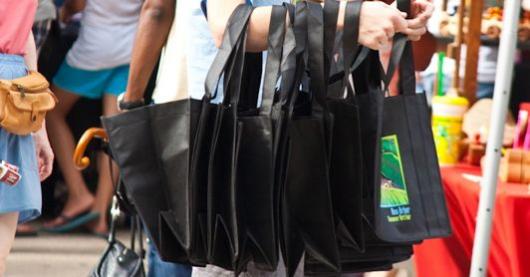
How many reusable bags to you have in your car or home? Do you use them when you shop? Who would have thought that reusable bags, thought to be the solution to plastic bag pollution, would become a problem?
Reusable bags were meant to supplant flimsy plastic grocery bags – the one-use, petroleum-based bags that critics say last for centuries and all too often wind up as litter or in the guts of sea life.
It’s not clear the reusables have done that in any significant way. Indirect measures suggest that plastic bag production has remained relatively steady.
What is clear is that reusables have taken off as a cultural phenomenon, social statement, and even art form.
“People are accumulating too many of these, so we’re back to the original problem,” said Vince Cobb, a Chicago businessman who reinvented himself as a reusable-bag expert and salesman at www.reuseit.com.
Not every reusable bag is environmentally equal. A nonwoven polypropylene bag, for example, would have to be used just 11 times to make up for the negative effects of a plastic bag used one time, according to a British Environment Agency study that compared bags. A cotton bag, however, would have to be used 131 times.
Perhaps it was inevitable that a culture hooked on shopping would find itself obsessed with bags. But there is a problem.
A grocery bagger in Texas quipped:
“Reusable bags are the pits. They are hard to bag; they take longer to bag leading to longer lines and longer times at the checkout. People hand or throw them at the bagger. They’re all wadded up inside one bag. They come in so many sizes it’s difficult to use them. I’ve found them with dead bugs, live ants, used condoms, trash and even lost credit cards in them. If people only had respect for those of us who have to put up with their nastiness, it would help.”
And this was the comment from a checkout clerk:
“As a cashier (of a large national grocery chain) I have a quota for how many items I scan per hour. The people who bring in their own bags drive my coworkers and I crazy! It’s time consuming … people never bring as many reusable bags as they need, and when you tell them you’re going to have to use plastic bags for the remaining groceries they freak out like you just killed a baby polar bear and they want you to remove the items and stack them back inside the reusable bag like a game of Tetris to “make it work.”
I have to admit that I did not realize the problems that reusable bag cause these hard working grocery professionals. Robin Shreeves the Stay-at-home mom blogger about finding eco-friendly food options came up with these Ten Commandments of Reusable Bag Use to help our friends at the grocery.
More companies are giving bags away as promotional items, if you already have enough, be polite and say No Thank You.

Chemical Structure of Styrene Acrylonitrile Copolymer
Plastic products are everywhere. More and more we are discovering there are health risks that make these convenient products not so desirable. Plastics are releasing harmful chemicals into our air, foods, and drinks.
While studies are showing the health risks of plastics, they are also overtaking our landfills.
Every bit of plastic that has ever been created still exists (except for the little bit that has been incinerated, which releases toxic chemicals). In the ocean, plastic waste is accumulating in giant gyres of debris where, among other thing, fish are ingesting toxic plastic bits at a rate which will soon make them unsafe to eat. Source: Healthy Child Healthy World
According to Healthy Child Healthy World, the best thing to do is to reduce your use of plastic. Look for natural alternatives like textiles, solid wood, bamboo, glass, stainless steel, etc. Also, look for items with less (or no) plastic packaging. If you do buy plastic, opt for products you can recycle or re-purpose (e.g. a yogurt tub can be re-used to store crayons). And, get to know your plastics – starting with this guide:
The most common plastics have a resin code in a chasing arrow symbol (often found on the bottom of the product).
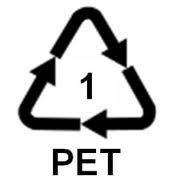 PET (Polyethylene Terephthalate): AVOID
Common Uses: Soda Bottles, Water Bottles, Cooking Oil Bottles
Concerns: Can leach antimony and phthalates.
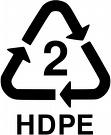 HDPE (High Density Polyethylene): SAFER
Common Uses: Milk Jugs, Plastic Bags, Yogurt Cups
 PVC (Polyvinyl Chloride, aka Vinyl): AVOID
Common Uses: Condiment Bottles, Cling Wrap, Teething Rings, Toys, Shower Curtains
Concerns: Can leach lead and phthalates among other things. Can also off-gas toxic chemicals.
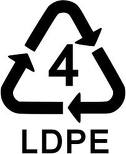 LDPE (Low Density Polyethylene): SAFER
Common Uses: Produce Bags, Food Storage Containers
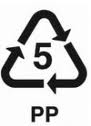 PP (Polypropylene): SAFER
Common Uses: Bottle Caps, Storage Containers, Dishware, Yogurt Containers
(TIP: You can recycle some of your #5 plastics including your used Brita pitcher filters through Preserve’s Gimme 5 recycling program.)
 PS (Polystyrene, aka Styrofoam): AVOID
Common Uses: Meat Trays, Foam Food Containers & Cups
Concerns: Can leach carcinogenic styrene and estrogenic alkylphenols
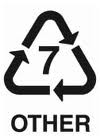 Other this is a catch-all category which includes:
PC (Polycarbonate): AVOID– can leach Bisphenol-A (BPA). It also includes ABS (Acrylonitrile Butadiene Styrene), SAN (Styrene Acrylonitrile), Acrylic, and Polyamide. These plastics can be a safer option because they are typically very durable and resistant to high heat resulting in less leaching. Their drawbacks are that they are not typically recyclable and some need additional safety research. New plant-based, biodegradable plastics like PLA (Polylactic Acid) also fall into the #7 category.
Source: Healthy Child Healthy World
When you’re organizing your spring cleaning keep in mind that switching to green cleaning products will improve your health, lessen adverse environmental impacts and save money.
According to the U.S. Environmental Protection Agency (EPA), of the 2,863 most commonly used chemicals only 7% have complete toxicity data and 43% have NO toxicity information available.
Here are a few green cleaning recipes:
OVENS:
GLASS CLEANER:
FABRIC RINSE/SOFTENER:
DETERGENT BOOSTER:
FURNITURE:
WOOD FLOORS:
AIR FRESHENERS:
ALL-PURPOSE CLEANER:
ALL-PURPOSE DISINFECTANT:
TUB AND TILE:
To clean your garbage disposal
To clean your microwave
Soft Scrub Alternative
Shopping Tips:

Look for products with the Green Seal. Green Seal, Inc. is the only organization that comprehensively evaluates non-toxic products.
READ LABELS. Companies are not required by law to list all product ingredients so only purchase brands that advertise full ingredient disclosure so you know what you’re bringing into your home.
 Craig A. Ruark LLC